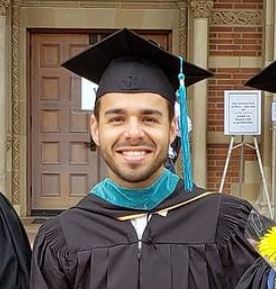
Data Scientist focused on Experimentation, Causal Inference, and Machine Learning, with 6+ years of experience spanning Data Science, Analytics Engineering, Data Engineering, and Quantitative Research.
My work combines statistical reasoning, predictive modeling, causal inference, and production data systems. I have built machine-learning models for customer churn and reactivation for the membership program of one of Brazil’s largest football clubs, conducted applied econometric research at UCLA and contributed to a World Bank research project.
I have also designed and migrated production-grade data pipelines and analytics platforms using dbt, Snowflake, Databricks, Redshift, SQL, and Python, including large-scale legacy migrations, incremental data models, data quality frameworks, and analytics-ready datasets for finance, e-commerce, insurance, and IoT use cases.
- Academic Training:
- Mechanical Engineer from UFRJ, where I graduated cum laude and was awarded the General Electric Scholarship
- Master in Economics & Public Policy from UCLA, awarded the Lemann Foundation Scholarship and the Luskin Scholarship
- (unfinished) doctoral training in Economics at Tilburg University in the Netherlands, awarded the Koopman’s Scholarship
- Current Focus:
- deepening my work in Experimentation, Causal Inference, and Causal Machine Learning
- Beyond Work:
- built a community of 6,000+ followers on LinkedIn
- lived and worked across the USA, Europe, and Brazil
- continue to play competitive amateur football wherever I go
Experimentation & Causal Inference
My current focus is on experimentation, causal inference, statistical reasoning, and causal machine learning, combining applied industry problems with rigorous mathematical foundations.
Courses & Educational Projects
-
Fundamentos para Inferência Causal
A Portuguese-language course for Brazilian data professionals, building Causal Inference from the ground up — from mathematics, probability, and statistical inference to regression, causal methods, and an end-to-end project taken into production. -
Mathematics & Statistics Foundations for Causal Machine Learning
A more theoretical and globally oriented project, focused on the advanced mathematical and statistical foundations behind Causal Machine Learning, connecting probability, statistical inference, econometrics, and modern causal methods.
Coming Soon
- A/B Testing & Experiment Design
- Statistical Inference for Experimentation
- Causal Inference in Observational Data
- Applied Machine Learning for Business Decisions
Selected Projects
-
Causal Inference: Customer-Satisfaction Program
Estimated the causal impact of a customer-satisfaction initiative using Difference-in-Differences to separate program effects from underlying time trends. -
Causal Inference: Recommendation System Impact
Estimated the impact of a recommendation system using Propensity Score Matching + Difference-in-Differences, supporting product evaluation with observational data.
Data & Analytics Engineering
A selection of projects from my professional experience building production data and analytics systems.